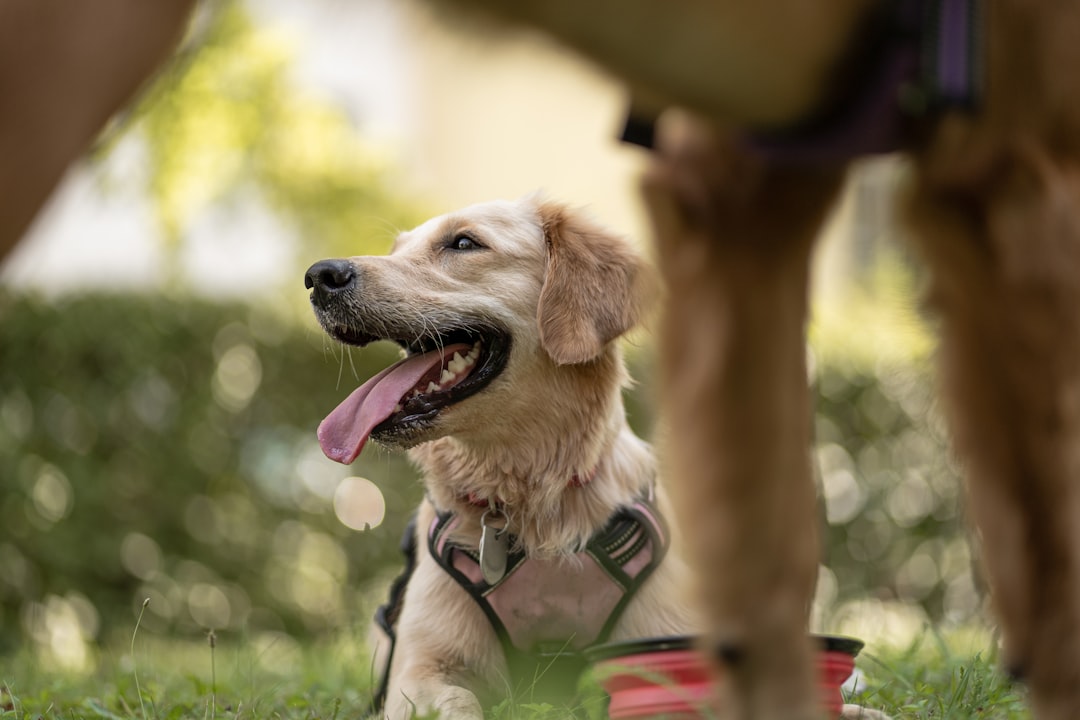
Service dog training has always been part science, part art. A skilled trainer watches a dog heel through a crowded grocery store and makes a judgment call: ready, or not ready. That judgment carries enormous weight. It determines whether a person with a disability gains a trained medical alert partner or spends another six months in a program. The problem is that no two trainers see the same thing, and no trainer can watch everything at once.
In 2026, the convergence of wearable sensors, edge-compute hardware and open-source pose estimation has made objective service dog training metrics a practical reality. At ServiceDog.AI we are building the measurement infrastructure that replaces "I think the dog is ready" with timestamped, reproducible behavioral evidence. This article breaks down the three core sensor modalities we use and explains how they can be integrated into any professional training program.
Why Subjective Assessment Fails Service Dogs and Their Handlers
Trainer observation is not a bad tool. It is an incomplete one. Interrater reliability studies on behavioral coding consistently show that even trained observers diverge significantly when rating subtle behavioral cues like ear position, tail carriage, lip tension or weight shifting. For pet dogs, that variance is tolerable. For service dogs whose public access rights depend on behavioral standards articulated in DOJ Title III guidance, it is a serious documentation problem.
The ADA two-question rule allows a business to ask whether a dog is a service dog required for a disability and what task the dog is trained to perform. It does not allow behavioral testing in the field. That means the behavioral evidence must exist before the team enters public access. If a program cannot produce objective documentation of training history, a handler who is challenged in a public space has no recourse beyond their own testimony.
Subjective trainer sign-off also creates program liability. When a dog placed by a program later exhibits reactivity, excessive vocalization or distracted behavior in public, the absence of objective pre-placement records makes it impossible to determine whether the behavior is new or was present and missed during evaluation. Sensor-based records change that calculus entirely.
The Assistance Dogs International (ADI) minimum standards and the IAADP minimum training standards both describe behavioral benchmarks in qualitative language. Translating those qualitative descriptions into quantitative sensor thresholds is the core engineering challenge this article addresses.
Accelerometer-Based Measurement of Public Access Neutrality
Public access neutrality is the requirement that a service dog move through a public environment without investigation of merchandise, people or food, without soliciting attention and without reacting to ambient distractions. It is the behavioral heart of every Public Access Test protocol. It is also notoriously hard to score objectively because it involves the absence of behavior rather than the presence of it.
A tri-axis accelerometer mounted on a collar or working harness provides continuous inertial measurement at sampling rates between 50 Hz and 200 Hz depending on the hardware. The signal encodes every head turn, lunge, freeze, sniff dip and body orientation shift as a distinct kinematic pattern. What matters for public access neutrality is not absolute movement volume but movement variance relative to handler gait.
Our approach at ServiceDog.AI uses a paired accelerometer configuration: one unit on the dog's dorsal harness and one worn by the handler at the hip. The handler signal establishes a locomotion baseline. The dog's deviation from that baseline, measured as root mean square error across the three axes during a standardized public access route, becomes a neutrality score. A dog that is heeling correctly with forward body orientation and minimal head movement will show low deviation. A dog that is scanning, pulling toward distractions or freezing will show elevated deviation even if the trainer is not watching that exact moment.
Consumer-grade IMU units like those used in veterinary research gait analysis studies published through journals such as the American Journal of Veterinary Research have validated that 3-axis accelerometers reliably distinguish between gait states in dogs at a fraction of force-plate laboratory cost. The same signal processing pipelines that identify lameness can be adapted to identify behavioral deviation during working gaits.
Threshold calibration matters. A dog working in a busy urban environment will show higher absolute movement variance than the same dog in a quiet clinic. Normalizing the score against a session-level ambient complexity rating, which can be estimated from handler GPS track density or audio spectral analysis, produces a context-adjusted neutrality score that is comparable across training environments. The TheraPetic® Training Plus program, available through officialservicedog.com, is piloting this context-normalized accelerometry scoring for candidate dogs in the urban access phase of training.
Heart Rate Variability as a Stress and Readiness Indicator
A dog can pass every behavioral check on a given day and still be operating at the edge of its stress tolerance. Trainers who work with dogs for years develop an intuition for reading subtle physiological signals: panting rate, yawning, blinking rate, coat texture changes. Sensors make those signals measurable and archivable.
Heart rate variability, the beat-to-beat variation in cardiac cycle length, is a validated proxy for autonomic nervous system state in mammals including dogs. Higher HRV in resting and working conditions correlates with parasympathetic dominance, which corresponds to calm, engaged behavioral states. Suppressed HRV corresponds to sympathetic activation, which is the physiological signature of stress, anxiety or arousal. Research in veterinary behavioral medicine has used HRV to differentiate shelter dogs by stress phenotype and to evaluate anxiolytic interventions.
For service dog training, HRV provides two distinct measurement opportunities. The first is resting baseline measurement before a public access session begins. A dog arriving at a training venue with suppressed HRV compared to its individual baseline is already in a mild stress state before the session starts. Proceeding with a high-difficulty scenario in that condition risks flooding rather than productive training. Objective HRV screening before sessions allows trainers to make data-informed decisions about session difficulty.
The second opportunity is continuous HRV monitoring during task work and public access routes. A dog performing a disruption-heavy scenario like navigating a farmer's market should show HRV that stays within a trained operating envelope. Spikes of cardiac arousal that are not linked to handler-initiated tasks signal environmental reactivity. Over weeks of logged sessions, the trend line tells the real story: is the dog's working HRV envelope expanding as it habituates to increasingly complex environments, or is it plateauing or contracting?
Veterinary-grade Holter monitors remain the gold standard for canine cardiac measurement but are impractical for daily training use. Newer textile-embedded optical heart rate sensors designed for working dogs are entering the market with accuracy validations conducted against ECG reference signals. At ServiceDog.AI we are evaluating multiple hardware platforms for signal quality, motion artifact rejection and onboard edge processing capacity. Any platform used in a certification-adjacent context must demonstrate artifact rejection rates sufficient to produce clean IBI (inter-beat interval) series during active locomotion, which is the hardest signal environment for optical sensors.
Video-Based Duration Tracking and Task Performance Analysis
Accelerometers tell you how a dog's body is moving. HRV tells you how the dog's nervous system is responding. Video tells you what the dog is actually doing in relation to its handler, the environment and specific task criteria. For training programs using the ServiceDog.AI platform, fixed-angle session cameras combined with a lightweight pose estimation model running on a local edge device create a continuous behavioral annotation stream without requiring a human observer to log every event manually.
Canine pose estimation has advanced substantially since the release of DeepLabCut for animal tracking, with newer architectures optimized for real-time inference on resource-constrained hardware. We use a fine-tuned version of a top-down pose estimation model trained on a proprietary dataset of working dogs in harness across indoor and outdoor environments. The model outputs 17-point skeletal landmarks per frame at 30 fps on a midrange GPU, sufficient for training facility use.
From that pose stream, three categories of metrics are automatically computed. Duration metrics track how long a dog maintains a specific body configuration: sit-stay duration, down-stay duration, heel position maintenance time and tether behavior duration. Positional metrics measure the dog's spatial relationship to the handler, including heel offset distance, lead tension angle and response latency from cue to position acquisition. Gait quality metrics analyze step length symmetry, body axis alignment to handler direction of travel and head position during forward locomotion.
Duration tracking is particularly important because duration criteria are explicitly embedded in every established Public Access Test protocol. A dog that holds a sit-stay for 45 seconds in a quiet room but breaks at 12 seconds in a restaurant environment is showing a real generalization deficit. Without video-derived duration records across multiple environments, that deficit is likely to be characterized impressionistically as "needs more work in distracting environments" rather than quantified as a 73 percent reduction in stay duration under ambient noise loads above 65 dB. The latter framing is both more precise and more actionable for training plan design.
Building a Multimodal Sensor Pipeline for Training Programs
No single sensor modality captures the full behavioral picture. Accelerometry without video cannot distinguish between a dog turning its head to investigate a distraction and a dog turning its head to make eye contact with its handler. Video without HRV cannot tell you whether the dog is physiologically stressed or simply executing a learned behavior under mild cognitive load. HRV without motion context cannot separate cardiac arousal caused by exercise from arousal caused by environmental stress.
The value proposition of multimodal sensor fusion is that conflation errors present in any single channel get resolved by the others. A spike in accelerometry deviation that coincides with elevated cardiac arousal and a pose-estimated head orientation toward a novel stimulus is a clear behavioral event. A spike in accelerometry deviation that coincides with normal HRV and a pose-estimated body orientation aligned to the handler direction is likely a normal postural adjustment.
For a training organization building this infrastructure, the practical stack looks like this. A collar-mounted IMU and optical heart rate unit transmits via Bluetooth Low Energy to a handler-carried smartphone acting as a data aggregator. A fixed session camera or handler-worn body camera streams video to a local edge compute unit, which runs pose estimation inference and returns skeletal landmark coordinates. All data streams are timestamped to a common clock and written to a session record that is uploaded to the training program's cloud database after the session ends.
Software integration is the hardest part of this stack. Hardware vendors do not design their devices to interoperate, and veterinary-grade cardiac monitors rarely expose raw IBI data through consumer-accessible APIs. ServiceDog.AI is developing an open middleware layer that normalizes data from multiple commercial hardware sources into a common session record schema. Training programs that want to participate in pilot testing of this infrastructure can contact us through therapetic.ai.
From Raw Sensor Data to Certification Readiness Scores
Raw sensor data is not useful to a trainer standing in a parking lot after a session. It needs to be transformed into interpretable summaries that support training decisions. The ServiceDog.AI platform applies a weighted composite scoring model that combines normalized accelerometry deviation, HRV working envelope maintenance and video-derived task duration compliance into a single session readiness score expressed on a 0-100 scale.
The weighting reflects the relative importance of each behavioral domain at different training phases. Early in foundation training, HRV working envelope is weighted heavily because the priority is confirming that the dog is not being pushed into chronic stress during skill acquisition. As training progresses toward public access scenarios, accelerometry neutrality weight increases because distraction resistance becomes the primary performance driver. In pre-certification assessment, duration compliance weight increases to reflect PAT protocol criteria.
The composite score is plotted as a trend line across sessions rather than evaluated as a single-session pass or fail. A dog showing an upward trend from session 12 to session 24 across all three component scores is demonstrating genuine learning, even if its absolute score remains below a certification threshold. A dog showing a plateau or regression trend is flagging a training problem that needs to be investigated before the program invests more session hours.
This trend-based framing aligns with how experienced trainers at programs affiliated with ADI and IAADP already think about dog development. Sensors formalize that thinking into a documented record that supports objective placement decisions and provides the behavioral history documentation that handlers can reference when exercising their rights under the ADA and the Fair Housing Act. The officialserviceanimal.com verification platform maintains handler documentation records that are designed to integrate with this kind of sensor-derived training history.
Ethical Considerations for Biometric Data in Working Dog Programs
Biometric data collection in training programs raises questions that the disability advocacy community is right to ask directly. Who owns the sensor data? Can a program use physiological records to deny placement and on what grounds? If a handler's own biometric data is captured by a handler-worn sensor, what privacy protections apply?
At ServiceDog.AI and TheraPetic® Solutions Inc., our position is that sensor data collected during training belongs primarily to the handler-dog team. Programs have a legitimate operational interest in aggregate anonymized data for model improvement and population-level training research. They do not have a legitimate interest in using individual dog physiological records to make placement decisions without handler-facing transparency about how those records are weighted.
Informed consent for data collection must be explicit, written and revocable. Any handler who asks to receive a full export of their team's session records must be able to get one. These are not abstract privacy principles. They are the practical requirements for building the kind of trust between training programs and disability communities that makes sensor adoption sustainable rather than adversarial.
The engineering community building these tools has a responsibility to design for handler agency from the start, not as a compliance afterthought. That means open data schemas, handler-accessible dashboards and clear documentation of what each metric measures and what it does not. Sensors do not replace human judgment in working dog training. They make human judgment better by giving trainers and handlers more complete information than the trainer's eye alone can provide.